08 July 2017

The Man Between (1953)


Ivo Kern: [Already starting to rub one of Susanne's feet] Are your feet cold?
Susanne Mallison: Yes, and my hands are cold. Your heart is the coldest of all.
Ivo Kern: I can warm your feet for you. It's a pity you can't do anything about my heart.
Susanne Mallison: I could try.
Ivo Kern: Why should you bother?
Director:  Carol Reed
Producer:  Carol Reed
Main Cast:  James Mason, Claire Bloom, Hildegard Knef, Dieter Krause
Runtime:  100 minutes
Continuing the success of Night Train to Munich (1940), Odd Man Out (1947), Fallen Idol (1948) and the brilliant The Third Man (1949), Carol Reed made The Man Between in 1953 however sadly it got mostly dismissed in light of The Third Man which remains today as one of the top British films in the Noir catalogue.  The Man Between, I believe, stands its own when given the chance and a new recent restoration makes it shine even better than ever.
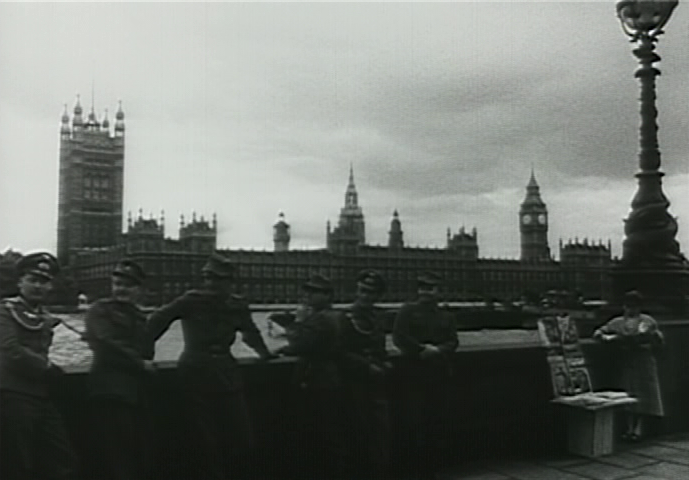
Where The Third Man was set amongst the rubble of Vienna, The Man Between has been wonderfully filmed in and around Berlin where the effects of WW2 stand out like a sore foot whether that be the bombed out buildings, new construction and the division between East and West Berlin.  
Susanne (Claire Bloom) flies into West Berlin and is met by her brother’s wife Bettina (Hildegard Knef) and soon after Susanne notices something odd between her brother Martin (Geoffrey Toone) and his wife.  Bettina takes Susanne into East Berlin and they happen to be met by Ivo (James Mason) and again Susanne suspects something between the two that goes much deeper than what is revealed.  Susanne falls for Ivo who has suspicious links to the East (Russian sector) and that gets them both into trouble leading up to a splendid cat and mouse chase through East Berlin in a hope to get to safety in the West sector.
Throughout the film we see a damaged Berlin in the dry, wet and snow and the overall cinematography is really wonderful in its own way just as the well-known shadowy images of The Third Man in Vienna and Belfast in Odd Man Out yet this takes a greater role in revealing the lives and surrounds of the people in post War Berlin and we begin to get a much greater sense of damaged lives though not to the extent of Germany Year Zero filmed 5 years earlier.  
There is a good sense of suspense and mystery, though perhaps not as well-crafted as The Third Man, yet still stands tall as one of the greater lesser known classics that are well worth discovering especially for the great acting and sobering surrounds.  
James Mason, Clair Bloom and Hildegard Knef all give fantastic performances and in fact all the supporting actors (the majority of whom are German) also give convincing portrayals of their characters and just add to the charm of the film.  
As is often the case, Australia misses out on these great classics and we are forced to look elsewhere for a good DVD/Bluray of them.  In this case the Bluray was imported from the UK and it was only released in January 2017.  
Showing off a new 2K restoration of the film, Studiocanal gives us a wonderful transfer of the film under the “Vintage Classics” label (known for releasing other classics such as The Ladykillers, Went the Day Well? and The Third Man).  The clean, crisp image is in the 1.37:1 aspect ratio and is simply excellent with great balance between the highlights and shadows.  The sound is also well restored in its original mono in a PCM (uncompressed) format and sounds great.  We also get the following extras:
  • Interview with Clair Bloom
  • Carol Reed: A Gentle Eye Documentary
  • BFI Audio Interview with James Mason (1967)
Overall this is a film that any fan of The Third Man would enjoy and therefore should not be missed.  The filming location also builds upon the story and would be of great interest to those seeking to get a view of post war Berlin.  Frankly, for me it was fantastic film almost on par with The Third Man and therefore comes Very Highly Recommended.


Movie
Image      
Disc

11 April 2017

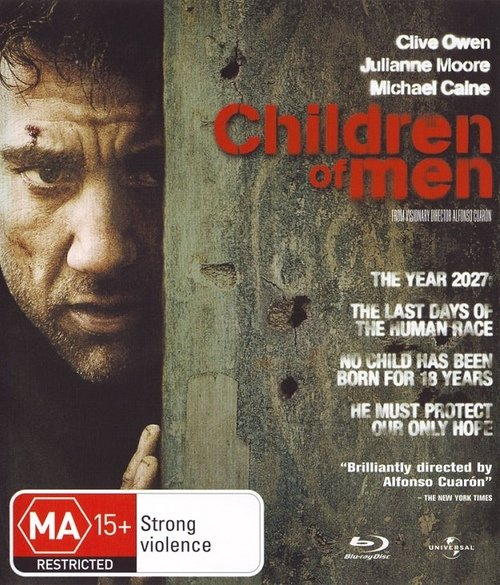
Children of Men (2006)


Theodore Faron: Julian? I haven't seen you in twenty years. You look good. The picture the police have of you doesn't do you justice.
Julian Taylor: What do the police know about justice?
Director:  Alfonso Cuarón
Producer: Marc Abraham, Eric Newman, Hilary Shor, Iain Smith, Tony Smith
Cinematography:  Emmanuel Lubezki
Main Cast:  Clive Owen, Michael Caine, Julianne Moore, Danny Huston
Runtime:  109 minutes


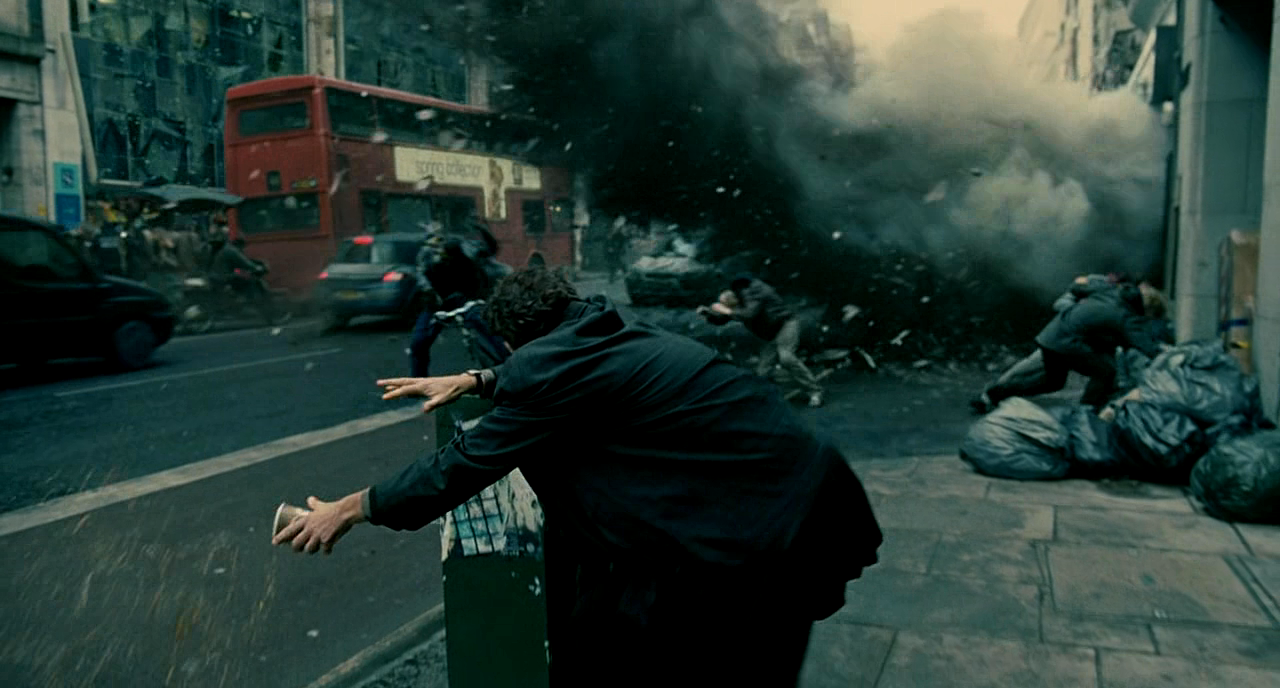
How much you can read into a film is often a reflection of its script and production, and in this case there is much that can be seen in this movie if you want to look hard enough.  The film is set in 2027, not too futuristic as to be disconnected with what we see today (ie. same kind of buildings and transport) but something that we can still relate too, yet something has happened that has changed the course of history.  It is at a time where there is little hope of a future as all the women have become infertile and as the movie starts the world is in mourning as the youngest child alive (18 years old) dies an unnatural death.  The world appears to be in chaos and the government rules with a stiff hand courtesy of the police.
From the opening scene we get to know the uncertainty and fear running through people’s minds and the fragility of them.  There are ideas of Britain almost becoming like a Nazi Germany but modernised and this really gets shown clearly if you watch the film looking at both foreground (the actors) and also what is happening in the background.  It almost seems that as much attention is given to the background as to the foreground where the camera is directly focused, and it is a movie that contains so much attention to detail that it is more often missed which is probably one of the reasons why it didn’t go too well at the box office yet some these days some consider it a masterpiece.  On the note of background detail, keep an eye out for the floating pig which is a direct reference to Orwell’s dystopian society which is sure to be noticed by Pink Floyd fans.


About halfway through there is a scene where the main cast are travelling in a car that gets ambushed which was filmed in one take (no chopping or changing of camera angles just one take).  Then closer toward the end there is an action scene that goes for about 6 minutes which again, is one long continuous take which is downright amazing when you consider what is happening in that scene.  Sure there have been other films that have done this with the gold medal probably going to Russian Ark where the whole film is one take (amazingly), but here we have the Cinematographer Emmaniel Lubezki (Gravity, Birdmen) doing some of what he does best.  So why is one take so good?  There is no chopping and changing between characters which can disconnect you from what is happening, but rather the camera moves and/or follows the cast or action in a way that makes you feel as though you are part of the action or tension of what is happening.  Some films like Alfred Hitchcock’s 1948 classic Rope have been skilfully edited to appear like one shot but in Children of Men there are quite a few long takes (over 30 minutes’ worth if you only take shots longer than 45 seconds) which really helps you feel part of the film.
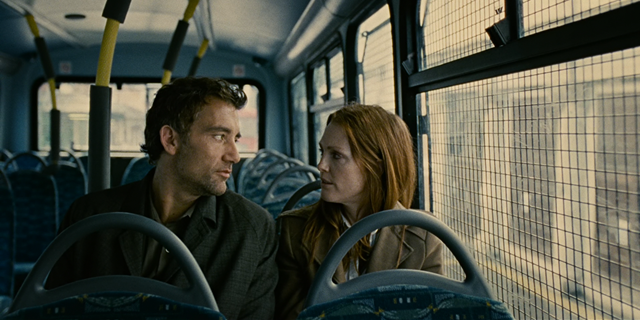
To cut a long story short Theo (Clive Owen) gets assigned by his ex-wife Julian (Julianne Moore) a task to transport the only known pregnant woman, Kee, to a group known as the “Human Project” who are trying to solve the world’s infertility problem.  The gets help along the way but comes across various obstacles as they try to hide the girl’s pregnancy from the population, particularly the authorities and those who would have more sinister motives.
There is some swearing in the movie and a scene containing a short segment of nudity when Kee reveals to Theo that she is pregnant.
The Bluray reviewed is the Australian release available at very reasonable prices in your local JB Hi-fi store.  The image is very strong and wonderfully presented in its 1.85:1 aspect ratio and has a powerful DTS HD Master Audio 5.1 soundtrack to keep your ears tuned in.  The Bluray also contains the following extras:
  • Creating the baby featurette
  • Deleted Scenes
  • Futuristic design featurette
  • Theo and Julian featurette
  • Under Attack featurette
  • Possibility of Hope featurette
  • Comments by Slavoj Zizek


I had seen this movie some years back and enjoyed it but now having viewed it after doing some minor reading up on it I enjoy it all the more as it is one you could watch multiple times and not get bored of its story or achievements.  It is a fantastic dystopian, science fiction thriller that will only gain more attention in years to come.  Highly Recommended!

Movie     
Image
Disc

04 April 2017

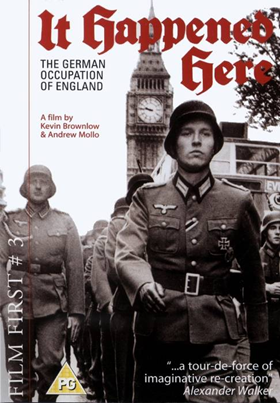
It Happened Here (1965)


[Pauline is registering]
Pauline: I've decided to join.
Clerk: We don't accept your decisions. You accept ours.
Director: Kevin Brownlow and Andrew Mollo
Producer:  Kevin Brownlow and Andrew Mollo
Runtime:  97 minutes
In the back of our minds the question starting with those words “What if” is often asked.  What if that engine broke down in the middle of nowhere?  What if I made a different choice at that part of my life?  Well this is one of three movies that I know of where the question is asked What if Hitler won WW2?   The other two I know of is the 1994 Fatherland starring Rutger Hauer and the UK 2010 film Resistance (I am excluding the Amazon TV series Man in the High Castle and BBC production SS-GB).
To give a brief description of the film I will quote a portion of the back of the DVD cover.
The German invasion of England took place in July 1940 after the British retreat from Dunkirk. Strongly resisted at first, the German army took many months to restore order. But the resistance movement, lacking outside support, was finally crushed. Then, in 1944, the resistance movement reappeared...”
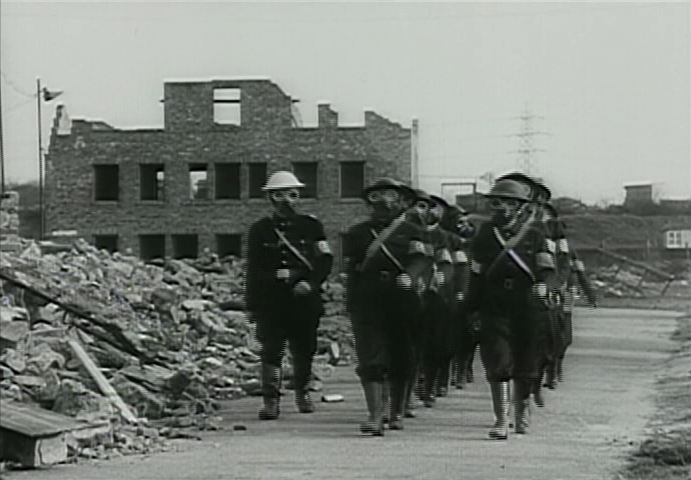
The movie was released in 1965 however it was filmed over eight years between 1956 and 1964 by two teens Kevin Brownlow 18 and Andrew Mollo at the age of 16.  It was filmed using mostly borrowed equipment, however to complete the project Stanley Kubrick donated left over stock film after he finished filming “Dr. Strangelove or: How I Learned to Stop Worrying and Love the Bomb”.  Considering the experience these guys had, the film is very life like and seems quite accurate as to how one would think it would work out should such a horrible thing have occoured.  
F:\Bromo's Files\My Pictures\vlcsnap-2016-01-01-20h16m23s787.png
The movie has a documentary feel to it which also gives it a great realism.  In a way it reminded me of the 1948 film Berlin Express, the first Hollywood film to be made in Germany after the war, which was a mystery/thriller partly based on a train and almost like a small documentary as it revealed the bombed out ruins of Frankfurt and parts of Berlin.  In this film however we view the film itself about the German forces in London and also what London looked like some years after the war.  
F:\Bromo's Files\My Pictures\vlcsnap-2016-01-01-20h18m33s833.png
The attention to detail is great and whilst the actors were pretty much volunteers they do a decent job especially as the film progresses.  In fact, some of the SS and Wehrmacht officers were actually ex-servicemen!  Even some of the music used in the film was actual music played in Germany during the war and the majority of the rest of it has a similar feel to it which makes this film even more believable.  I could only imagine how hard it would have been for the locals to see this movie being made.
The DVD reviewed here is a remastered version of the film and at the time of writing will cost about $30-$45 for a legit copy on Ebay, Amazon UK or USA which has already gone up from when I purchased it in August 2015.  The video quality is dark at the start but the video brightens up a bit in its 1.33:1 aspect ratio.  The audio however, remains a bit uneven throughout the movie but is generally fine with a few tweaks of the volume control.  The DVD comes with the following extras:
  • Original cut of newsreel footage
  • Trailer
  • Galleries of Occupied Paris and Production Stills
  • Introduction by Kevin Brownlow
Overall the movie is a stunning imagination of what it could have been like if the outcome of WW2 was different.  It comes recommended as it is scary in its realism as to what could have happened.  It makes me feel so blessed and thankful to God that the Nazi’s did not win the war.
Movie     
Image          
Disc

25 March 2017

Germany Year Zero (1948)


Edmund: I have no work, and neither does Eva. My brother still won't report and get his card.
Il maestro: I understand, but what can I do?
Edmund: My father needs treatment. Can't you help me? What can I do?
Il maestro: There's nothing you can do. Times are hard for everyone, worse for weak and old people. You've done all you can.
Edmund: But what if he dies?
Il maestro: If he dies, he dies. We all die sooner or later. Would you rather die yourself or let an old man live?
Director:  Roberto Rossellini
Producer:  Roberto Rossellini
Main Cast:  Edmund Moeschke, Ernst Pittschau, Ingetraud Hinze, Franz-Otto Krüger, Erich Gühne
Runtime:  78 minutes
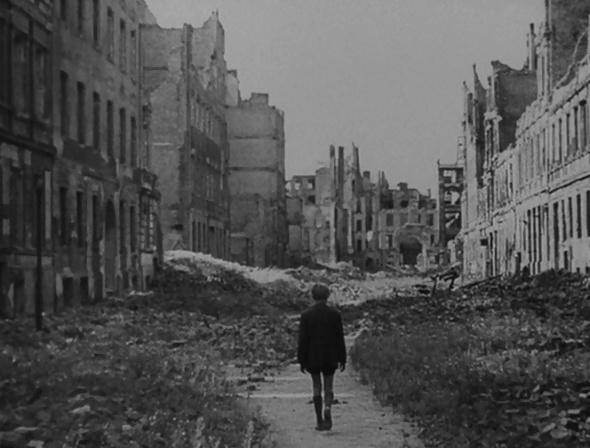
Rubble films.  These are films that were filmed soon after World War II that showed the destruction (rubble) of war torn countries.  The first Hollywood film to be made in Germany after the war was The Berlin Express (1948) (an enjoyable thriller) but that pales in comparison to Roberto Rossellini’s stunning film Germany, Year Zero.  Whilst The Berlin Express shows sections of bombed out Frankfurt and Berlin, Germany Year Zero dumps you right in the middle of Berlin and tells the story of a family’s survival post war.  This is actually Roberto Rossellini’s final film in his War Trilogy, the former two being Rome, Open City (1945) and Paisan (1946).
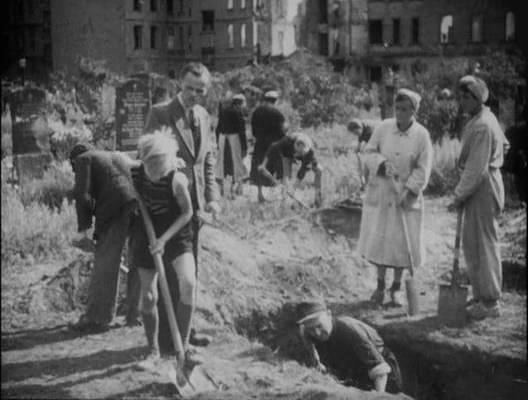
Filmed around Berlin in 1948, Germany Year Zero is quite a sobering sight to see.  The amount of destruction is hard to grasp and apart from documentaries, it doesn’t get more sobering than here in Rossellini’s film where we see not just a city with much rubble but broken lives affected by the war and it would have to be one of the most complete post-war views in cinema.  The scenery isn’t fake and the lives are generally quite real and authentic though they are naturally not the greatest actors available on screen at the time.  The movie is, in a way, two films in one where the scenery forms a documentary of the times and life of the people and then of course there is the story within the film.
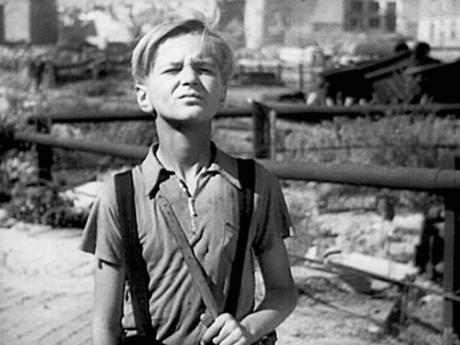
The film follows the life of a young boy, Edmund (Edmund Moeschke) who goes out each day trying to sell and scrounge whatever he can to help the rest of his family to survive.  They live in an overcrowded apartment block that is in poor shape just like many buildings in Berlin during that time.  His mother died in the war, father is bedridden due to illness, older brother (who served in the war) refuses to register his name and therefore has to remain in hiding unable to get a job and finally Edmund’s sister who also helps to support the family. Overall it is a story that tells us of the hardships of post war in a country that lost the war and it can almost have a documentary feel to it at times.  Naturally, considering the surroundings, setting and time you will not find a happy story here but something quite down to earth in its story telling and a glimpse of real post war life in incredibly difficult times.
As shown in the above images, this is not some constructed set and you often need to remind yourself that the backdrop is real.  Only the interior shots were mostly filmed in Rome the rest however, is the real deal.  It’s a fascinating yet sad film knowing that mankind does this to each other (Nazi Germany did the same, even worse, to other countries).  Another film I recently viewed is the wonderful The Man Between (1953) which again shows Berlin in ruins though some of the rubble has naturally been cleared.  The first film to be shot in Germany after the war was Die Mörder sind unter uns also known as The Murderers are Among Us (1946) and as you could imagine is also a sad eye opener in terms of destruction it shows to both man and landscape.
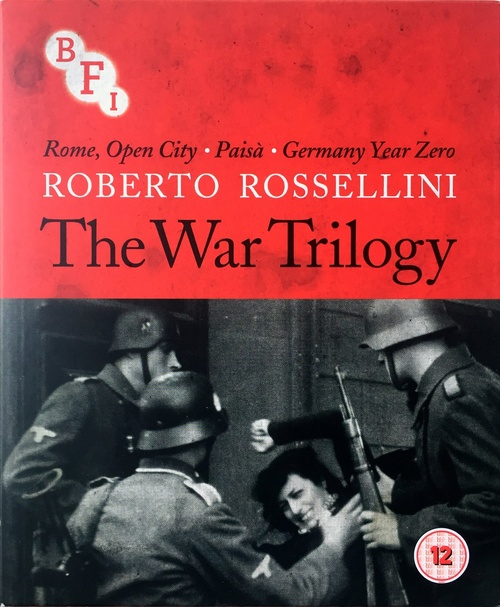
The Bluray reviewed here was imported from the UK and in this case is a limited run of 3000 copies in the trilogy pack which contains Roberto Rossellini’s three rubble films being “Rome, Open City”, “Paisa” and “Germany Year Zero” on three separate Bluray’s.  You can also get DVD copies of the film though I doubt they will have the same restored image and extras as the Blurays here.
The image is quite rough and naturally so considering film stock would not have been easily available, however the image is still very acceptable and the roughness of it just adds to the documentary and authentic feel of the movie.  To be honest I doubt you will ever see this film in better condition than this, hence the higher marks for image quality (the source is the issue, not the transfer to Bluray).  The film is presented in a 1.33:1 aspect ratio and runs for a brisk 73 minutes.  The audio is also quite good considering and is in a PCM Mono format in German with English subtitles.  
The Bluray also contains an 80-minute feature by Roberto called L’amore (1948) as an extra feature on the same disc as Germany Year Zero.
Having only seen the film in review from the boxset, I would have to say that this is quite an important film for restoration as it gives a raw image of the horror people had to go through after the war and gives us perspective of the devastation that occours not just to the cityscape but also to individual lives.  Highly recommended for those interested in a different aspect of War movies.

Movie C:\Users\Yosam\AppData\Local\Microsoft\Windows\INetCacheContent.Word\Ferret small new.gifC:\Users\Yosam\AppData\Local\Microsoft\Windows\INetCacheContent.Word\Ferret small new.gif      
Image C:\Users\Yosam\AppData\Local\Microsoft\Windows\INetCacheContent.Word\Ferret small new.gifC:\Users\Yosam\AppData\Local\Microsoft\Windows\INetCacheContent.Word\Ferret small new.gifC:\Users\Yosam\AppData\Local\Microsoft\Windows\INetCacheContent.Word\Ferret small new.gif      
Disc C:\Users\Yosam\AppData\Local\Microsoft\Windows\INetCacheContent.Word\Ferret small new.gifC:\Users\Yosam\AppData\Local\Microsoft\Windows\INetCacheContent.Word\Ferret small new.gifC:\Users\Yosam\AppData\Local\Microsoft\Windows\INetCacheContent.Word\Ferret small new.gif